Battery-powered equipment, Spare/loose batteries and 'Smart' baggage containing batteries.
Now we will talk about batteries. On this page we'll look at:
- Batteries inside electronic devices
- Spare or loose batteries, including powerbanks
- Smart bags that contain batteries or power packs
Batteries used in other items such as mobility aids, security equipment or e-cigarettes are covered elsewehere in Module 3.
Before we start - take a breath.
There is a lot of information in this section.
That's ok. You are not expected to memorise every last detail at this stage. That will come with experience. What matters most is that you:
- Know what kinds of batteries exist
- Understand why rules apply
- Know what to do if you are unsure
Your Operator / employer will always have:
- A Dangerous Goods Manual or Documentation to refer to, containing all the necessary detail
- A Dangerous Goods Specialist or Manager that can make a firm decision based on the information you provide
The main message to remember:
If a passenger is carrying batteries and you are not sure whether they are allowed:
- In flight ⇒ As Cabin Crew, contact the Pilot-in-Command immediately
- On the ground ⇒ check the Operator's Dangerous Goods Manual; ask your supervisor; or contact the Dangerous Goods Specialist / Manager
Batteries are everywhere. Phones, laptops, cameras, medical devices - passengers and crew carry them every day, often without thinking twice.
From a dangerous goods point of view, though, batteries deserve attention because all batteries can become dangerous in some circumstances. Each year there are a lot of incidents on planes worldwide caused by batteries.
Why batteries are treated as dangerous goods.
We'll say it again: all batteries can become dangerous under certain conditions. For example, batteries can:
- Overheat
- Catch fire
- Short-circuit
- Be damaged if crushed or activated unintentionally
- Fail due to manufacturing defects
Lithium batteries are especially important. They have caused many aircraft fires worldwide, which is why the rules around them are strict. Fires caused by lithium batteries are very difficult to extinguish.
This is not about inconvenience - it is about safety.
Before we dive into the Table 2.3.A extracts for batteries, let's look at some of the different battery types and how they are categorised. This will help you understand what the extracts are talking about.
Battery types
- Lithium batteries
Table 2.3.A talks a lot about lithium batteries. There are two main types:
- Lithium ion batteries: These are usually rechargeable and store a lot of energy (for example: phones, laptops, cameras etc).
- Lithium metal batteries: These are usually not rechargeable.
In this course we often group both together and simply call them "lithium batteries".
- Non-lithium batteries
Not all batteries contain lithium. Many everyday devices use batteries such as:
- Nickel Metal Hydride (NiMH)
- Alkaline
- Nickel Cadmium (NiCad)
Common sizes include AAA, AA, C, and 9V.
Even though these are common, they can still be a fire risk - especially if carried loose.
Battery capacity
Battery capacity is the measure of how much energy a battery can store. Rules for batteries carried on board depend on:
- The capacity of the battery
- The type of battery
- Whether it is installed in a device or if it is spare / loose
Battery capacity is measured as:
- Watt-hours (Wh) for lithium ion batteries
- Grams of lithium (g) for lithium metal batteries
- Watt-hours (Wh), Ampere-hours (Ah) or milliampere-hours (mAh) for non-lithium batteries
All batteries, regardless of capacity and whether they are lithium or otherwise, should have a clear and legible manufacturer's label on the casing. This will give details of the battery type and capacity.
Spare batteries and power banks - why they need special attention
Power banks are treated as spare batteries, not as devices. Spare / loose batteries and power banks are higher risk because:
- The terminals can touch
- They can short-circuit
- They can be damaged inside luggage
That's why spare / loose batteries - including power banks - have special rules, including:
- They are forbidden for transport inside checked baggage
- Spare/loose batteries and power banks must not be placed in overhead lockers
- They must be placed in cabin baggage either under the seat in front or in another easily-accessible designated storage location, eg the seat back pocket
- They should not be used to power or charge portable electronic devices on board the aircraft
- They must not be charged using inseat/inflight power on board
- All spare batteries and power banks must be individually protected from damage and short circuiting.
Protection from short-circuits can be achieved by taping over exposed terminals or by placing each battery in a separate plastic bag or protective pouch. They can also be protected by simply leaving them inside the manufacturer's packaging.
 |
A reminder for check-in staff: Passengers don't always realise that batteries are dangerous goods. That's why check-in staff must always ask: "Are you carrying any dangerous goods or any spare batteries?" |
Depending on the passenger and the situation, you may need to ask follow-up questions. This might be something like: "Do you have any power banks in your luggage?" or perhaps "Are you carrying power tools in your bag?". The question will depend upon the passenger and what you think they might be carrying.
Battery-related acronyms in Table 2.3.A
And finally, before we get into the Table 2.3.A battery extracts, there are some abbreviations you'll see being used:
- PED - Portable Electronic Device
- POC - Portable Oxygen Concentrator
- PMED - Personal Medical Electronic Device
You don't need to memorise these - just recognise them.
Now let's look at the six Table 2.3.A battery extracts!

Extract 1: Portable electronic devices containing lithium metal or lithium ion batteries
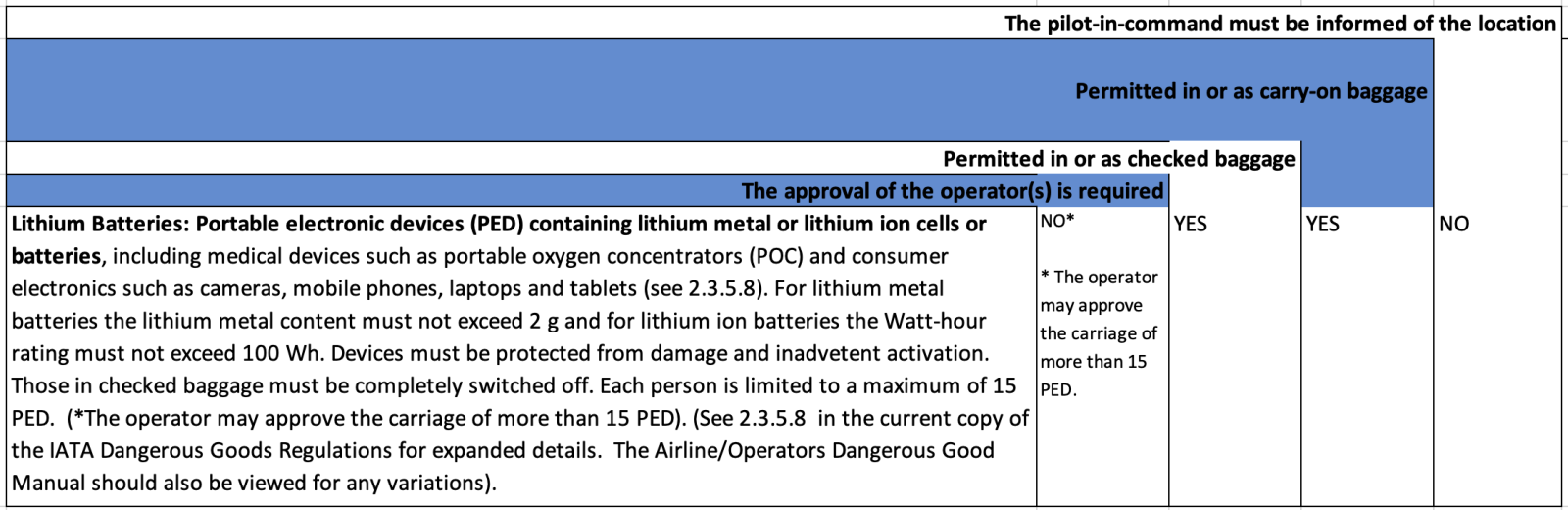
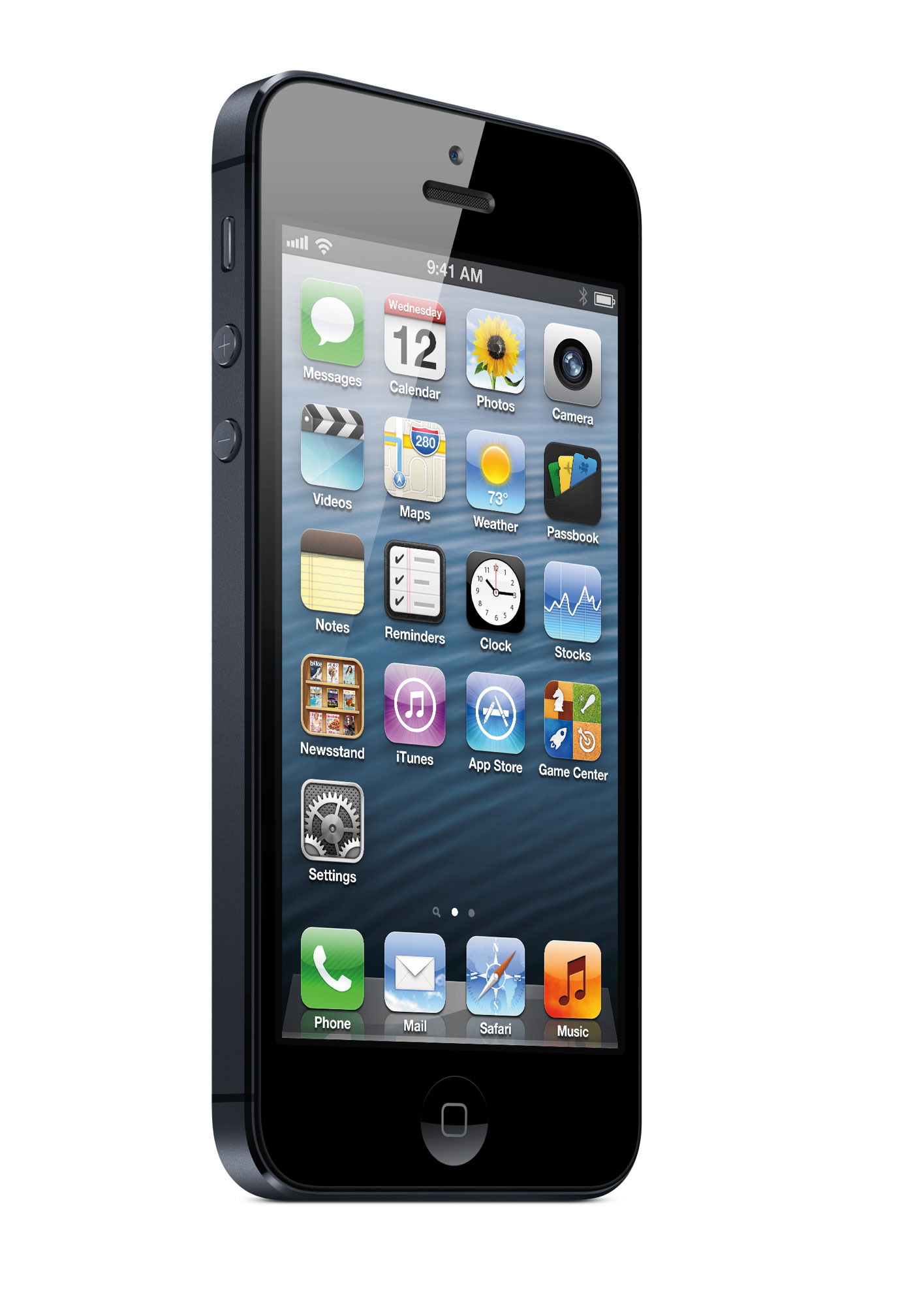
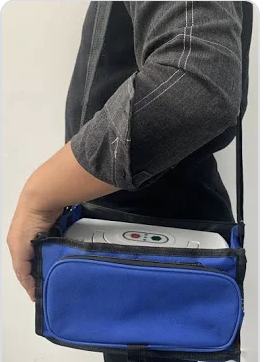
This extract covers everyday electronic devices - also known as Portable electronic devices (PED), such as:
- Mobile phones
- Laptops
- Cameras
- Gaming devices
- Small medical devices such as Portable Oxygen Concentrators (POC)
The batteries in these devices must not exceed:
- 2g lithium metal, or
- 100 Wh lithium ion
Key points to note from this extract:
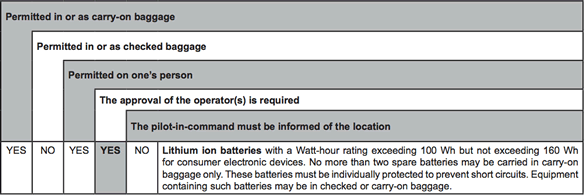
| - |
Permitted in or as carry-on-baggage |
YES
|
|
| - |
Permitted in or as checked baggage |
YES
|
|
| - |
The approval of the operator(s) is required NB: The operator may approve the carriage of more than 15 PEDs. |
NO
|
|
| - |
The pilot-in-command must be informed of the location |
NO
|
Also note from the extract: Devices must be protected from damage and inadvertent activation. Devices in checked baggage must be completely switched off, not in sleep or hibernation mode.
Extract 2: Lithium battery-powered electronic devices
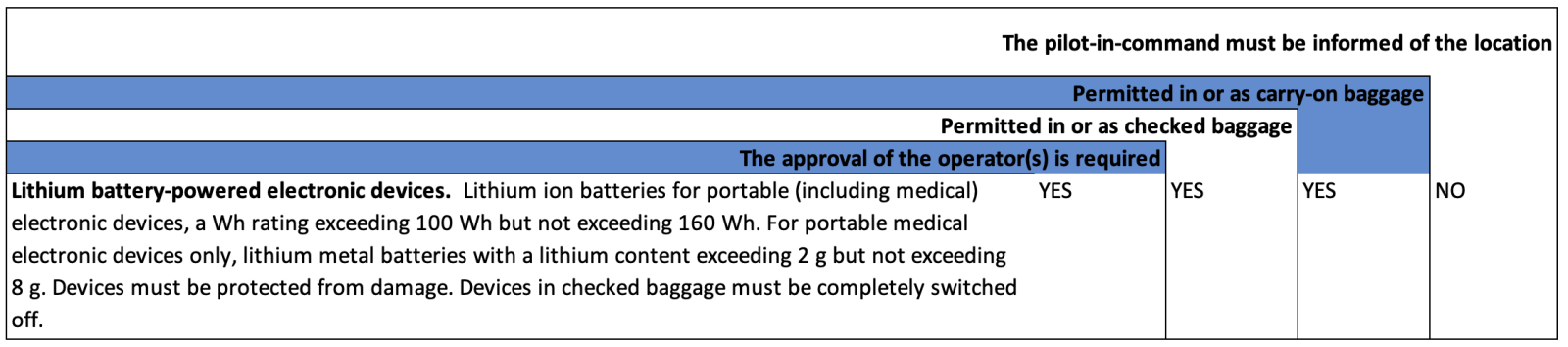
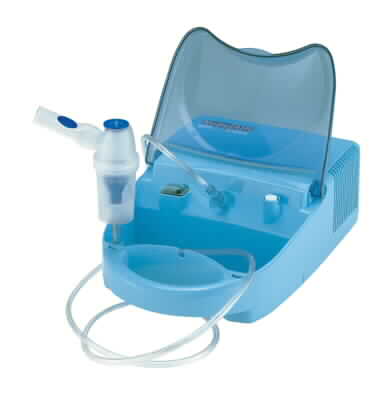
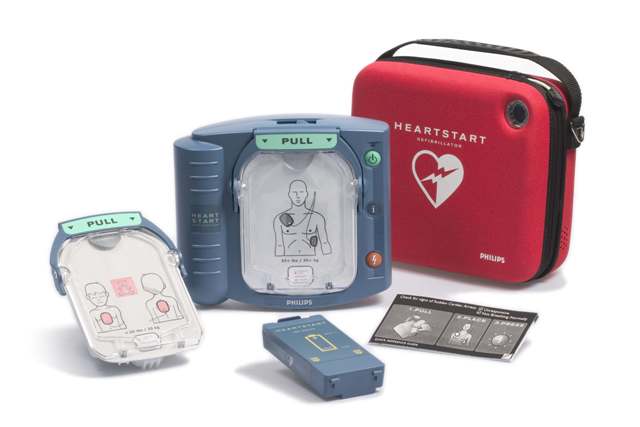
This category applies when the battery is larger and fitted into medical devices:
- Lithium ion batteries over 100 Wh, up to 160 Wh
- For portable Medical devices only: lithium metal over 2 g up to 8 g
Important points to note from the extract:
- Operator approval is required
- Devices must be protected from damage
- Devices in checked baggage must be completely switched off, not in sleep or hibernation mode
Also note from the table above:
|
- Permitted in or as carry-on-baggage |
YES
|
|
- Permitted in or as checked baggage |
YES
|
|
- The approval of the Operator is required |
YES
|
|
- The pilot-in-command must be informed of the location |
NO
|
Extract 3: Batteries, spare/loose, including Lithium batteries
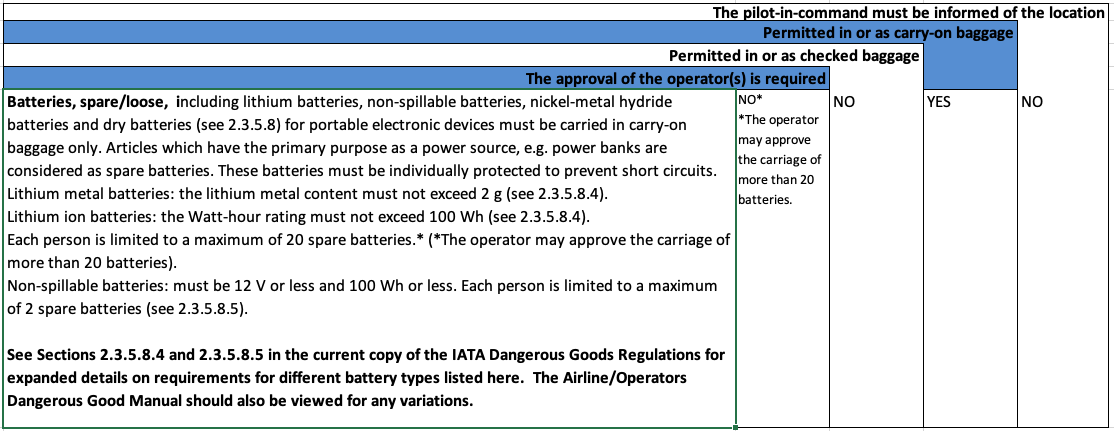
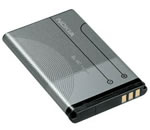
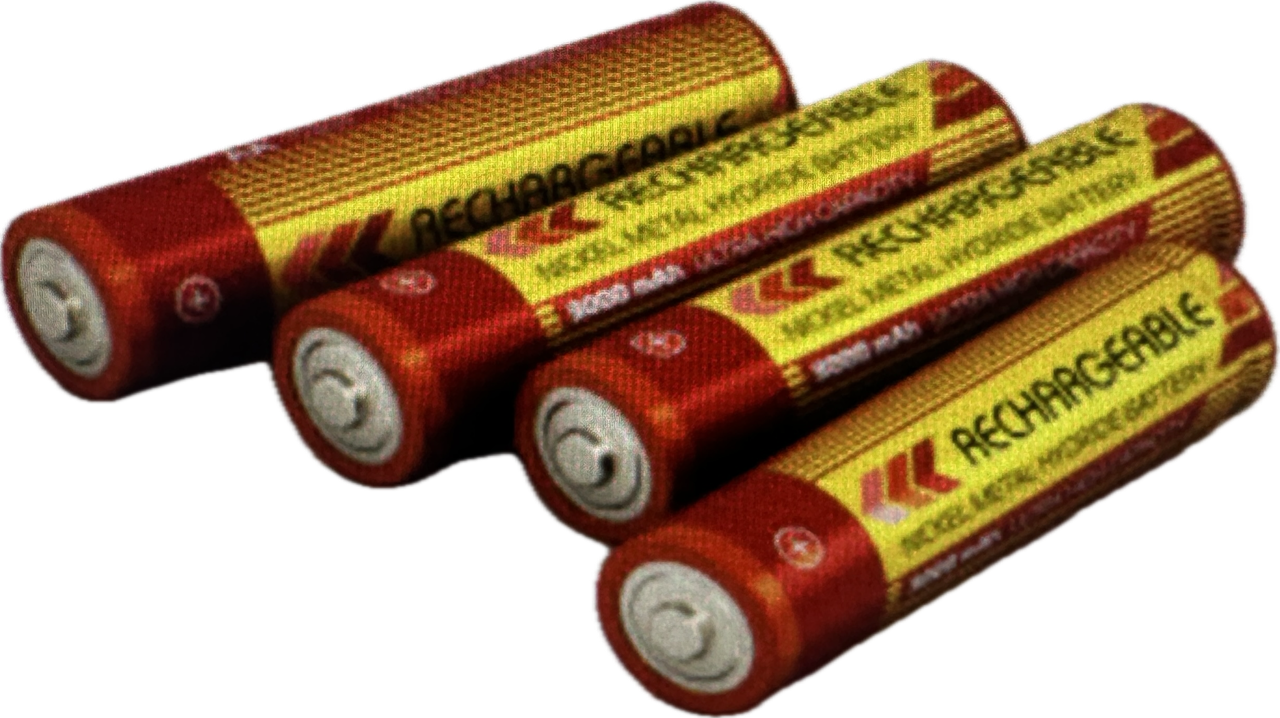
This extract is talking about many kinds of spare batteries, not just lithium batteries. This includes:
- Power banks
- Small lithium batteries (≤ 2g or ≤ 100 Wh) - must must meet the criteria of IATA DGR Section 2.3.5.8.4
- Non-lithium batteries
Key rules for spare batteries and power banks in this extract:
- Spare batteries and power banks must be carried in carry-on baggage only
- They cannot go in checked luggage
- For non-spillable batteries:
- Maximum of two (2)
- These must be 12 volts or less or 100 Wh or less
- All batteries must be individually protected from short-circuiting
And remember:
- All spare batteries and power banks must be individually protected from damage
- They must not be placed in overhead lockers when on board
- They must not be used to charge or power devices while on board
- They must not be charged at any time on board using in-seat or inflight power
- They must be placed in cabin baggage either underneath the seat in front or in another designated storage location, eg the seat back pocket
Spare / loose batteries and powerbanks can be protected by:
- Keeping them in the original packaging
- Taping over the terminals
- Placing each battery in separate sealed bag or pouch
Please note from the table above:
| - |
Permitted in or as carry-on-baggage |
YES
|
|
| - |
Permitted in or as checked baggage |
NO
|
|
| - |
The approval of the operator(s) is required NB: the operator may approve the carriage of more than 20 batteries |
NO | |
| - |
The pilot-in-command must be informed of the location |
NO
|
Extract 4: Lithium batteries, spare/loose

This extract refers to higher-power spare or loose lithium batteries for electronc devices and Personal Medical Devices (PMED).
Key things to note from the extract are:
- Must not exceed 160 Wh or 2 mg lithium metal
- Personal Medical Devices (PMED) only may go up to but not exceed 8 mg lithium metal
- Maximum of two (2) spare batteries may be carried
- Spare batteries and power banks must be carried in carry-on baggage only
- They cannot go in checked luggage
- Must be individually protected to prevent short circuits
In addition:
- All spare batteries and power banks must be individually protected from damage
- They must not be placed in overhead lockers when on board
- They must not be used to charge or power devices while on board
- They must not be charged at any time on board using in-seat or inflight power
- They must be placed in cabin baggage either underneath the seat in front or in another designated storage location, eg the seat back pocket
Spare / loose batteries and powerbanks can be protected by:
- Keeping them in the original packaging
- Taping over the terminals
- Placing each battery in separate sealed bag or pouch
Other things to note from the table above:
| - |
Permitted in or as carry-on-baggage |
YES
|
|
| - |
Permitted in or as checked baggage |
NO
|
|
| - |
The approval of the operator(s) is required |
YES | |
| - |
The pilot-in-command must be informed of the location |
NO
|

Smart bags powered by batteries or powerbanks (Extract numbers 5 & 6)
Smart bags containing powerbanks/batteries/powerpacks for charging mobile devices such as laptops, phones etc. They can only be carried on board as checked or carry-on baggage if they meet certain criteria.
Let's take a look at what Table 2.3.A says about smart bags.
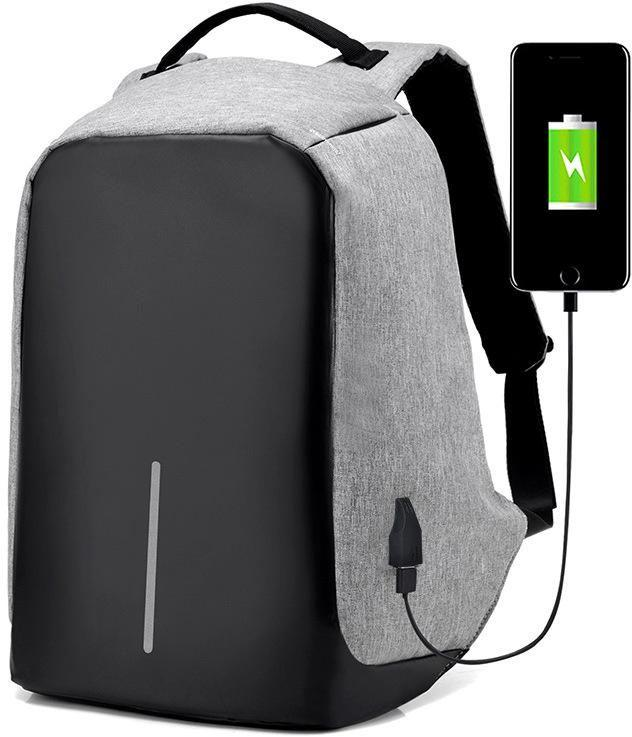
Extract 5: Baggage with installed lithium batteries

This extract is referring to smart bags with non-removable large batteries. If a smart bag has a non-removable battery that exceeds:
- 0.3 g lithium metal, or
- 2.7 Wh
Then the bag is FORBIDDEN. It cannot travel:
- As carry-on
- As checked baggage
- Under any approval
Basically, it is not allowed on board at all!
Things to note from the extract above:
| - |
Permitted in or as carry-on-baggage |
NO | |
| - |
Permitted in or as checked baggage |
NO
|
|
| - |
The approval of the operator(s) is required |
NO | |
| - |
The pilot-in-command must be informed of the location |
NO
|
Therefore, if the powerbank/pack exceeds 0.3 g lithium metal or 2.7 Wh and the battery cannot be removed then it is FORBIDDEN for carriage. It cannot be taken as checked baggage or as carry-on baggage.
Extract 6: Baggage with installed lithium batteries
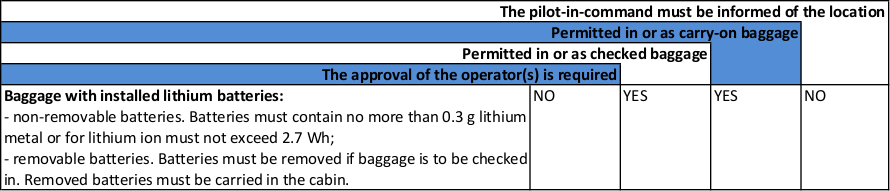
This extract refers to smart bags with removable batteries OR non-removable but smaller batteries.
You can see from this extract smart bags are allowed if:
- The battery is removable, or
- The battery is non-removable but very small (≤ 0.3 g lithium metal or ≤ 2.7 Wh)
Rules to remember:
- Removable batteries must be taken out
- Removed batteries must go in the cabin
- Removed batteries cannot go in checked luggage
Things to note from the extract above:
| - |
Permitted in or as carry-on-baggage |
YES | |
| - |
Permitted in or as checked baggage |
YES | |
| - |
The approval of the operator(s) is required |
NO | |
| - |
The pilot-in-command must be informed of the location |
NO
|
Final reminder
We have now wrapped up our look at the various extracts from Table 2.3.A for batteries in portable devices, spare / loose batteries (including powerbanks) and smart bags.
Just remember: If there is any doubt about batteries - do the following:
- If on the ground, check with your supervisor and/or the Operator's Dangerous Goods Manual
- If still in doubt, contact the Dangerous Goods Specialist / Manager
- If there is a concern once on board the aircraft - contact the Captain immediately!